
Sectional Garage Doors,
Fitted Across the County

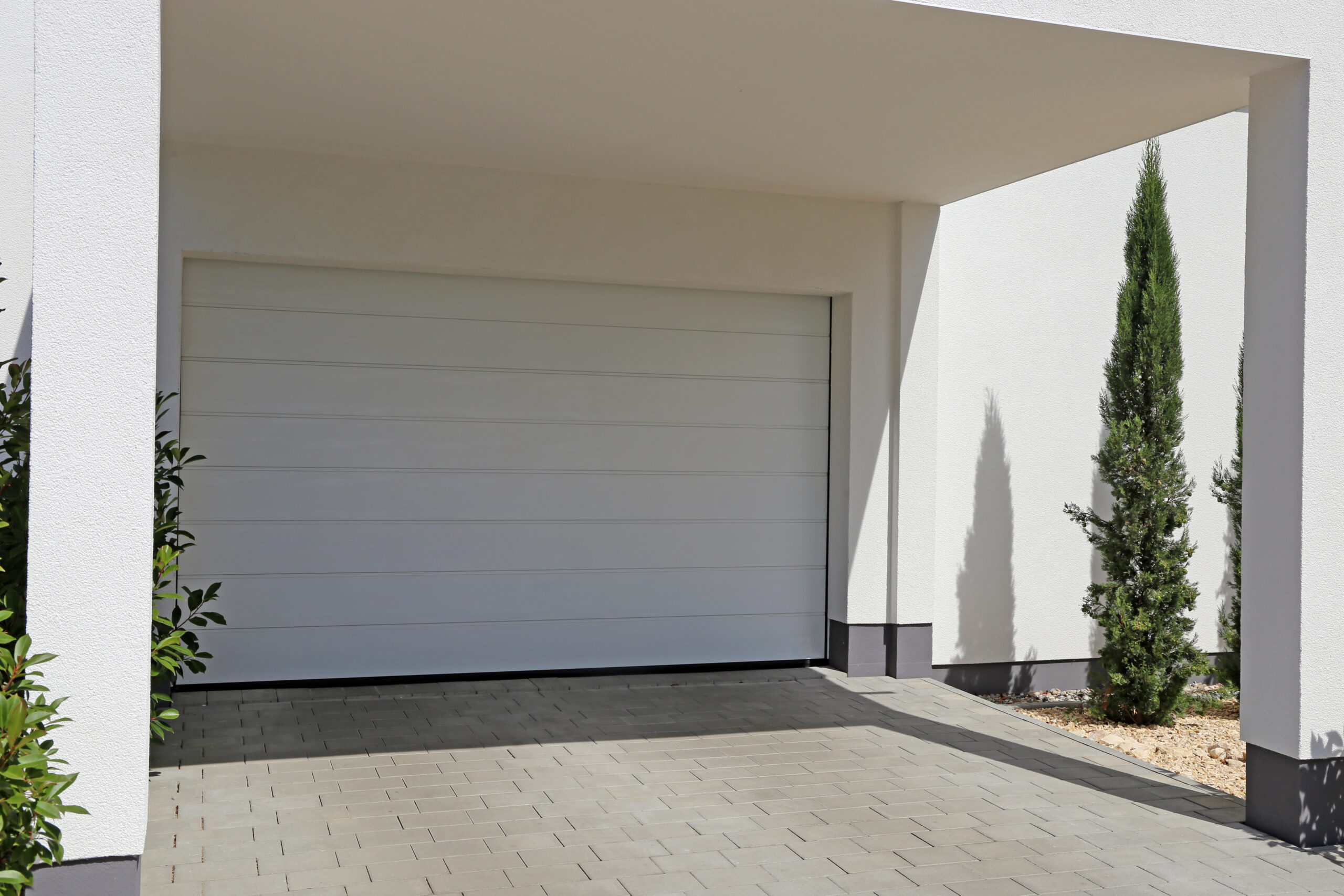
Sectional doors open vertically, taking up no driveway space and maximising headroom inside your garage. A popular choice for both new builds and replacements across Northampton and Northamptonshire.
Local, Wellingborough based
Covering all of Northamptonshire
Free, no-obligation quotes
Measured and priced in writing
All makes repaired
Regardless of who fitted the door
Fitting guaranteed
Plus manufacturer warranty
How a sectional door is built
Four parts that decide how well the door runs and how long it lasts.
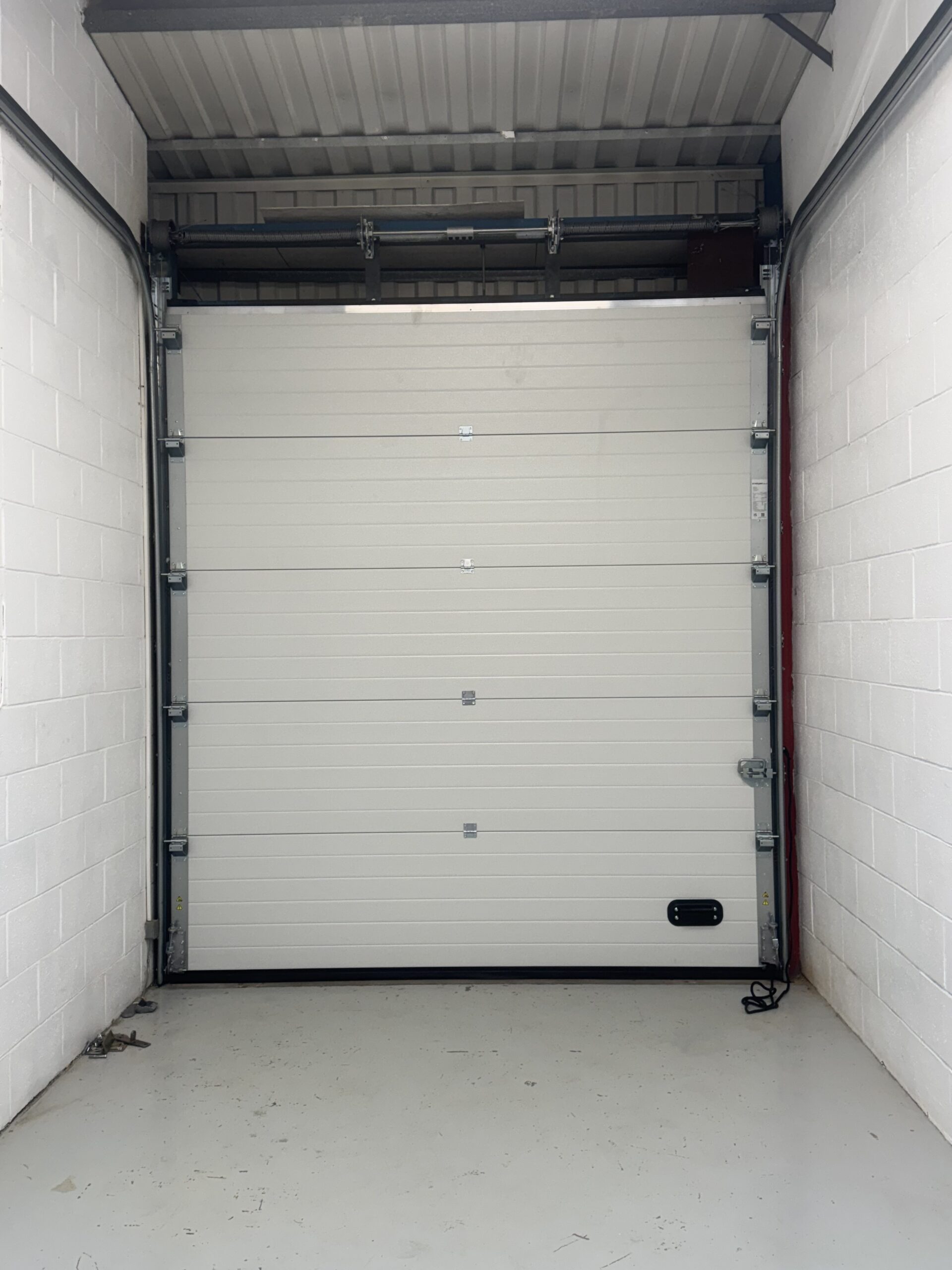
Foam-filled panels
Steel skins either side of an injected polyurethane core, typically 40mm, with finger-safe profiled joints between them. That is what makes sectional the warmest and quietest door type we fit.
Torsion springs and cables
A torsion shaft above the opening counterbalances the weight, so the door holds any position and the motor is barely working.
Tracks and headroom
Standard, low-headroom and high-lift track sets. We measure the headroom at quote stage and specify the track to suit rather than forcing a standard kit.
Four-sided seals
Bottom, sides and head all seal against the frame, which is why sectional doors keep out the driven rain that gets past most up and over doors.
Insulation and energy efficiency
Sectional panels are usually foam-filled, so they’re the warmest and quietest doors we fit. That insulation is the main reason to pick a sectional over a roller if your garage is a workshop, gym or utility space, or is attached to the house. The seals do as much work as the panels. A sectional seals on all four sides, which keeps out the draughts and driven rain that get past most up-and-over doors.
Sectional door repairs
Sectional doors fail differently to up and over doors. These are the faults we are called out to most, on doors of any make and whoever fitted them.
Damaged panel
Torsion spring failure
Cable off the drum
Rollers and hinges
Motor and safety reverse
Perished seals
Tight driveway?
A Sectional Garage Door is usually the answer. Call for a free measure.